
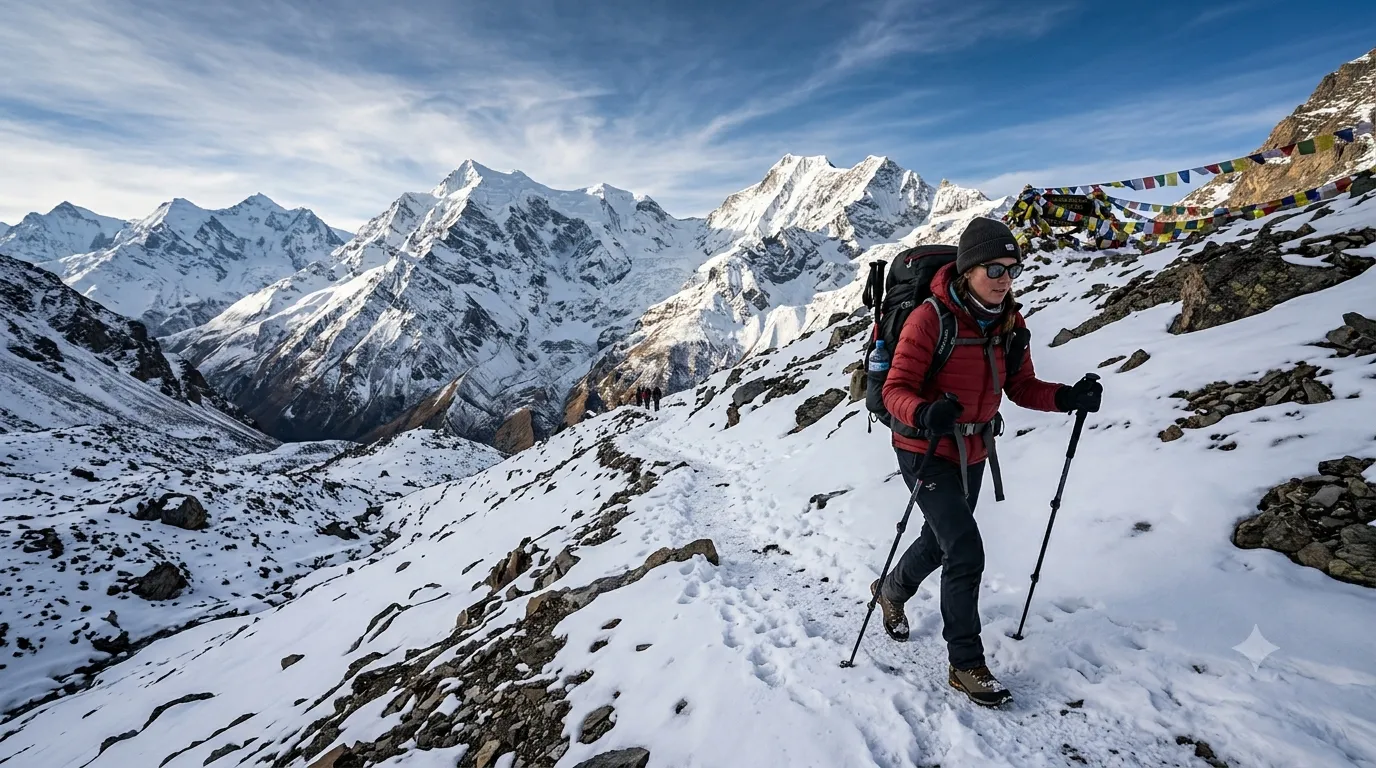
The Annapurna Circuit Trek is one of Nepal’s most iconic trekking adventures, attracting thousands of outdoor enthusiasts every year. Renowned for its breathtaking mountain scenery, rich cultural heritage, and dramatic landscapes, this journey offers an unforgettable experience through the heart of the Himalayas. Among all its highlights, Thorong La Pass stands as the ultimate challenge and the most rewarding achievement for trekkers.
Standing at an impressive altitude of 5,416 meters (17,769 feet), Thorong La Pass is one of the highest trekking passes in the world. Reaching its summit is not only a physical accomplishment but also an emotional milestone that rewards hikers with panoramic views of snow-covered peaks stretching across the Annapurna and Dhaulagiri mountain ranges.
Whether you are planning your first Himalayan adventure or adding another trek to your bucket list, the Annapurna Circuit Trek with Thorong La Pass promises memories that will last a lifetime.
What Is the Annapurna Circuit Trek?
The Annapurna Circuit Trek is a classic long-distance hiking route that circles the magnificent Annapurna Massif in central Nepal. Traditionally spanning around 160 to 230 kilometers, the route has evolved over the years due to road construction, allowing trekkers to customize the itinerary based on available time and fitness.
The trek passes through a remarkable variety of landscapes, beginning in lush subtropical forests before ascending into alpine meadows, barren valleys, and high-altitude deserts. Along the way, trekkers encounter charming villages inhabited by Gurung, Thakali, and Tibetan-influenced communities, offering a fascinating glimpse into Nepal’s diverse cultures.
Unlike many trekking routes that focus solely on mountain views, the Annapurna Circuit provides a complete Himalayan experience combining natural beauty, cultural immersion, and adventurous challenges.
Why Thorong La Pass Is the Highlight
No part of the Annapurna Circuit Trek is more famous than Thorong La Pass. Crossing this high mountain pass is the defining moment of the journey and the reason many trekkers choose this route.
The ascent begins well before sunrise from Thorong Phedi or High Camp, allowing hikers to reach the pass before strong afternoon winds develop. Although the climb is physically demanding because of the high altitude and thin air, the reward is extraordinary.
Upon reaching the summit, colorful prayer flags flutter against a backdrop of towering Himalayan peaks. Trekkers celebrate their accomplishment while taking in unforgettable views of Annapurna II, Annapurna III, Gangapurna, Tilicho Peak, and the mighty Dhaulagiri range.
Descending from Thorong La Pass leads into the beautiful Mustang region, where the landscape transforms dramatically into dry cliffs, deep canyons, and ancient Tibetan-style villages.
Best Time for the Annapurna Circuit Trek
Choosing the right season significantly improves your trekking experience.
Spring (March to May)
Spring is among the most popular seasons for the Annapurna Circuit Trek. Rhododendron forests bloom with vibrant colors, temperatures remain pleasant, and mountain views are generally excellent.
Average daytime temperatures:
-
Lower elevations: 15°C to 22°C
-
Higher elevations: -6°C to 10°C
Autumn (September to November)
Autumn is considered the best trekking season in Nepal. Stable weather, crystal-clear skies, and comfortable temperatures create ideal conditions for crossing Thorong La Pass.
Average daytime temperatures:
-
Lower elevations: 12°C to 20°C
-
Higher elevations: -8°C to 8°C
Winter (December to February)
Winter offers peaceful trails and snowy scenery but presents additional challenges. Heavy snowfall can temporarily close Thorong La Pass, making flexibility essential.
Monsoon (June to August)
Monsoon brings frequent rain, slippery trails, landslides, and cloudy mountain views. However, sections in the rain-shadow region of Upper Mustang remain relatively dry.
Suggested 15-Day Annapurna Circuit Trek Itinerary
Day 1: Arrival in Kathmandu
Meet your guide, prepare permits, and explore Nepal’s vibrant capital.
Day 2: Drive to Dharapani
Begin the adventure with a scenic drive through beautiful river valleys.
Day 3: Trek to Chame
Walk through forests and traditional villages while enjoying your first close views of Annapurna II.
Day 4: Trek to Upper Pisang
Pass waterfalls, pine forests, and dramatic rock formations.
Day 5: Trek to Manang
Visit ancient monasteries and enjoy panoramic Himalayan scenery.
Day 6: Acclimatization Day in Manang
Explore nearby viewpoints or hike to Ice Lake to help your body adapt to higher elevations.
Day 7: Trek to Yak Kharka
The vegetation becomes sparse as you enter higher alpine terrain.
Day 8: Trek to Thorong Phedi
Prepare for the most challenging day of the trek.
Day 9: Cross Thorong La Pass and Trek to Muktinath
Start before dawn, conquer Thorong La Pass, and descend to the sacred pilgrimage town of Muktinath.
Day 10: Trek to Jomsom
Follow the Kali Gandaki Valley through fascinating desert landscapes.
Day 11: Fly or Drive to Pokhara
Relax beside the lakes after completing your trek.
Day 12: Explore Pokhara
Visit Phewa Lake, Davis Falls, and the World Peace Pagoda.
Day 13: Return to Kathmandu
Enjoy a scenic drive or flight back to the capital.
Day 14: Leisure Day
Shopping, sightseeing, or cultural exploration.
Day 15: Departure
Transfer to the airport for your journey home.
Difficulty Level
The Annapurna Circuit Trek is generally considered moderately difficult to challenging.
The greatest challenge is not the walking distance but the altitude. As trekkers climb above 5,000 meters, oxygen levels decrease significantly, making every step more demanding.
Good physical fitness, gradual acclimatization, and proper pacing greatly increase your chances of successfully crossing Thorong La Pass.
Altitude Sickness and Safety
Altitude sickness can affect anyone regardless of age or fitness level.
Common symptoms include:
-
Headache
-
Nausea
-
Fatigue
-
Dizziness
-
Loss of appetite
-
Difficulty sleeping
To reduce risk:
-
Ascend gradually.
-
Stay hydrated.
-
Avoid alcohol.
-
Eat nutritious meals.
-
Take acclimatization days seriously.
-
Inform your guide immediately if symptoms worsen.
Safety should always take priority over reaching the summit.
Permits Required
Trekkers must obtain the following permits before starting the Annapurna Circuit Trek:
-
Annapurna Conservation Area Permit (ACAP)
-
TIMS Card (where applicable according to current trekking regulations)
These permits support conservation efforts while helping authorities monitor trekkers for safety.
Accommodation Along the Trail
One of the advantages of the Annapurna Circuit Trek is its well-developed teahouse network.
Most teahouses provide:
-
Comfortable twin-sharing rooms
-
Warm meals
-
Hot drinks
-
Charging facilities
-
Wi-Fi in many villages
-
Hot showers (often available for an extra fee)
Accommodation becomes more basic as altitude increases, especially near Thorong Phedi and High Camp.
Food During the Trek
Trekkers enjoy a surprisingly diverse menu throughout the route.
Popular meals include:
-
Dal Bhat
-
Fried rice
-
Vegetable noodles
-
Tibetan bread
-
Pancakes
-
Pasta
-
Soups
-
Momos
-
Eggs
-
Porridge
-
Tea and coffee
Dal Bhat remains the favorite choice because it provides balanced nutrition and unlimited refills at many teahouses.
Essential Packing List
Pack smart to stay comfortable in changing mountain conditions.
Recommended gear includes:
-
Waterproof trekking boots
-
Warm down jacket
-
Waterproof shell jacket
-
Thermal base layers
-
Fleece jacket
-
Trekking pants
-
Warm gloves
-
Wool hat
-
Sunglasses
-
Sunscreen
-
Sleeping bag
-
Trekking poles
-
Water purification tablets
-
Headlamp
-
Reusable water bottles
-
Personal first aid kit
Avoid overpacking since every extra kilogram becomes noticeable at higher elevations.
Wildlife and Natural Beauty
The Annapurna Conservation Area is Nepal’s largest protected region and is home to remarkable biodiversity.
Trekkers may encounter:
-
Himalayan tahr
-
Blue sheep
-
Musk deer
-
Himalayan monal
-
Snow pigeons
-
Griffon vultures
The trail also passes through rhododendron forests, deep river gorges, alpine grasslands, and barren Himalayan plateaus, making every day visually unique.
Cultural Experience
The Annapurna Circuit Trek is not only about mountains.
Villages along the route preserve centuries-old Buddhist traditions. Prayer wheels, colorful monasteries, chortens, mani walls, and fluttering prayer flags create a spiritual atmosphere throughout the journey.
The town of Muktinath holds great religious significance for both Hindus and Buddhists, attracting pilgrims from across Nepal and India.
Trekkers also enjoy warm hospitality from local families who have welcomed visitors for generations.
Photography Opportunities
Photographers will find endless inspiration throughout the Annapurna Circuit Trek.
Highlights include:
-
Sunrise over Annapurna II
-
Snow-covered Thorong La Pass
-
Ancient monasteries
-
Yak caravans
-
Traditional stone villages
-
Kali Gandaki Gorge
-
Colorful prayer flags
-
Himalayan glaciers
-
Dramatic mountain reflections
Carry spare batteries, as cold temperatures reduce battery life quickly.
Why Choose the Annapurna Circuit Trek?
Few trekking routes offer such incredible diversity in a single journey.
The Annapurna Circuit Trek combines spectacular mountain scenery, cultural exploration, wildlife, ancient villages, sacred temples, and the unforgettable challenge of crossing Thorong La Pass. Every day introduces new landscapes and unique experiences, making the trek suitable for adventure seekers who want more than just mountain views.
Crossing Thorong La Pass provides a genuine sense of achievement that remains with trekkers long after they return home. The combination of physical challenge, natural beauty, and cultural richness has made this route one of the world’s greatest trekking adventures.
Conclusion
The Annapurna Circuit Trek is much more than a hiking trail—it is a journey through some of Nepal’s most diverse landscapes and vibrant mountain cultures. From lush valleys and traditional villages to high alpine terrain and the awe-inspiring Thorong La Pass, every stage of the trek offers something remarkable.
With proper preparation, good acclimatization, and a spirit of adventure, trekkers can safely experience one of the most rewarding Himalayan expeditions. Whether your goal is to witness breathtaking panoramas, immerse yourself in local traditions, or conquer one of the world’s highest trekking passes, the Annapurna Circuit Trek delivers an adventure unlike any other.
